
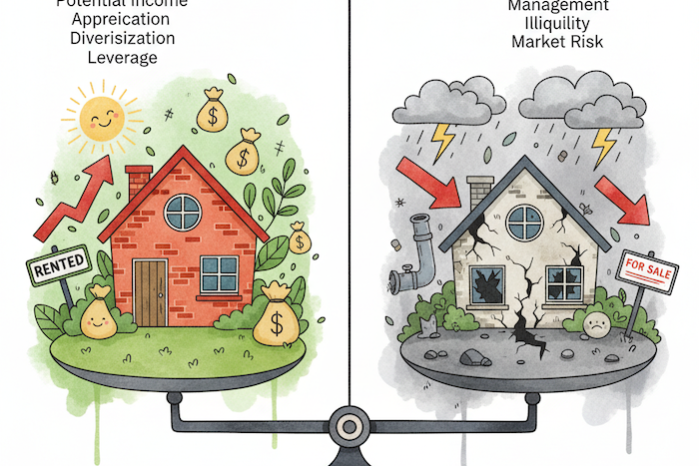
As an Approved Financial Planner, I know that property investment is a cornerstone of wealth creation for many Australians. It is a significant financial undertaking that requires careful consideration and a clear-eyed understanding of the risks involved. Property is not a "get rich quick" scheme; it is a tangible, long-term investment demanding patience, due diligence, and a robust financial strategy. Let's consider the Pros and Cons of Property Investment.
This article provides a balanced discussion of the pros and cons of investing in Australian residential property, with a specific focus on the current dynamics of the Perth market.
The Allure of Property: Why Investors Choose Real Estate
The enduring appeal of property investment stems from a combination of financial mechanisms and psychological comfort that few other asset classes can match.
1. Capital Growth: The Long-Term Wealth Driver
The primary goal for most property investors is capital growth—the increase in the property's market value over time. Historically, Australian residential property has demonstrated a consistent, albeit cyclical, upward trend in value, making it a powerful engine for long-term wealth accumulation . This growth is driven by fundamental economic factors: population increase, limited land supply, and inflation. The long-term trajectory has proven reliable.
2. Rental Income: Generating Cash Flow
A key advantage of investment property is the ability to generate a secondary income stream through rent. This rental income serves two critical purposes: Offsetting Costs, helping cover expenses like mortgage interest, rates, and maintenance; and Positive Cash Flow, where in high-yield markets, the income exceeds expenses, putting money directly into the investor's pocket.
3. Leverage: Magnifying Returns
Property investment uniquely benefits from leverage, the use of borrowed money (a mortgage) to increase the potential return of an investment. An investor might only need a 20% deposit, borrowing the remaining 80%. If the property value increases by 10%, the return on the initial deposit is significantly magnified, assuming the cost of borrowing is manageable . This ability to control a large asset with a small amount of capital is a major drawcard.
4. Tax Advantages: The Power of Negative Gearing
Australia's tax system offers specific benefits to property investors, most notably through negative gearing. This occurs when the total cost of owning a rental property (interest repayments, maintenance, rates, etc.) exceeds the rental income it generates . This net loss can then be offset against the investor's other taxable income, reducing their overall tax liability. While the goal is long-term capital growth, this tax benefit provides a valuable cash flow advantage in the early years.
5. Tangibility and Control
Unlike shares or managed funds, property is a tangible asset—a physical structure on a piece of land that an investor can see, touch, and control. This tangibility provides psychological comfort and a sense of security. The investor has direct control over the asset, including decisions on renovations, maintenance, and tenant selection, which can directly influence its value and rental yield .
The Perth Property Market: A Case Study in Opportunity
The Perth property market provides a compelling, current example of these advantages in action, driven by unique local economic and demographic factors.
|
Perth Market Metric
|
Data Point
|
Significance for Investors
|
Source
|
|
Median House Price
|
Approx. $770,000
|
Indicates strong capital growth potential.
|
|
|
Annual House Growth
|
17.7% (for houses)
|
Demonstrates a sustained, robust upward trend.
|
|
|
Rental Vacancy Rate
|
0.49% (Extremely tight)
|
Suggests high demand and minimal vacancy risk.
|
|
|
Average Rental Yield
|
4.9%
|
Offers attractive cash flow compared to other capital cities.
|
|
|
Days on Market (DOM)
|
Approx. 12 days
|
Reflects intense buyer competition and market speed.
|
|
A persistent supply-demand imbalance, significant population growth, and a thriving resources-led economy 1 underpin Perth's current market strength. For investors, this translates to a market where properties sell quickly, rental yields are strong, and the risk of prolonged vacancy is low, making it an attractive proposition for capital growth and cash flow.
The Other Side of the Coin: Pros and Cons of Property Investment
While the benefits are substantial, a responsible financial advisor must highlight the significant disadvantages and risks that can undermine an investment if not properly managed.
1. High Entry Costs: The Barrier to Entry
High entry costs, a significant barrier for new investors, characterise property investment. These costs extend far beyond the purchase price and include: a deposit (typically 20% to avoid LMI), Stamp Duty (a significant upfront state government tax, often tens of thousands of dollars in WA), Legal and Conveyancing Fees, and Lender's Mortgage Insurance (LMI). These upfront costs reduce available capital and can take years to recoup.
2. Lack of Liquidity
Property is an illiquid asset. Unlike shares, which can be sold instantly, selling a property is a lengthy process that involves market preparation, listing, negotiation, and settlement, which can take several months. If an investor needs access to capital quickly, they may be forced to sell at a discount or may be unable to access the funds on time.
3. Ongoing Costs and Income Loss
The costs of holding an investment property are substantial and continuous, regardless of whether the property is tenanted. These include: Mortgage Interest (the largest expense, fluctuating with rates), Council Rates and Land Tax, essential Insurance (building and landlord), Property Management Fees (typically 7-10% of rental income ), and Maintenance and Repairs (unexpected costs like a burst hot water system can significantly impact cash flow).
A major risk is income loss due to vacancy periods. Even in a tight market like Perth, a property may sit vacant between tenants, meaning the investor receives no rental income but must still cover all holding costs. A prolonged vacancy can quickly turn a positively geared property into a financial drain.
4. Poor Property Selection: The Risk of Underperformance
The success of a property investment hinges on the initial purchase decision. Poor property selection is a critical risk that can lead to years of underperformance . This includes buying in Oversupplied Areas (resulting in slow growth and depressed yields), Ignoring Local Drivers (failing to research infrastructure, school zones, and employment hubs), and Structural Issues (hidden defects resulting in massive, unexpected repair bills).
A poorly selected property can become a financial liability, requiring the investor to inject personal funds to cover the shortfall, potentially for years to come.
5. Legislative and Economic Risks
Property investment is highly susceptible to changes in government policy and the broader economy, including interest rate rises (which increase mortgage repayments and holding costs), Tax Law Changes (alterations to negative gearing or CGT rules), and Rental Legislation (new laws on tenant rights or standards that increase compliance costs).
Property as a Tangible, Long-Term Investment
Despite the risks, property remains a favoured asset class because it is fundamentally a tangible, long-term investment.
Property is a real asset that cannot be destroyed by a company's collapse or a sudden stock market crash. Its value is intrinsically linked to the land it sits on, a finite resource, providing a hedge against inflation .
Crucially, property investment is a long-term strategy. The costs and risks are most pronounced in the short term. Over a 15- to 20-year horizon, the power of compounding capital growth, combined with the gradual reduction of the loan principal through rental income, delivers significant wealth. Short-term investors often expose themselves to the highest transaction costs and market volatility, missing out on the true benefits of a patient, long-term approach.
Conclusion and Call to Action
Property investment in Australia, particularly in dynamic markets like Perth, offers a powerful pathway to financial security through capital growth, rental income, and the strategic use of leverage. However, it is a complex undertaking fraught with risks, including high entry costs, illiquidity, ongoing expenses, and the danger of poor property selection.
The decision to invest, and where to invest, should never be taken lightly. It requires a personalised strategy that aligns with your specific financial goals, risk tolerance, and cash flow capacity.
If you are considering entering the property market or reviewing your existing portfolio, the next step is to seek professional guidance.
Call to Action:
For personalised, professional advice tailored to your unique financial situation, we would like to encourage you to contact an Approved Financial Planner in Perth today. Our experts can help you navigate the complexities of the market, assess your risk profile, and develop a robust, long-term investment strategy.
References
Source: Approved Financial Planners, reviewed by Daniel Stevens (AFSL 536864). This is general information only. For personalised advice, consult a licensed financial advisor.


