
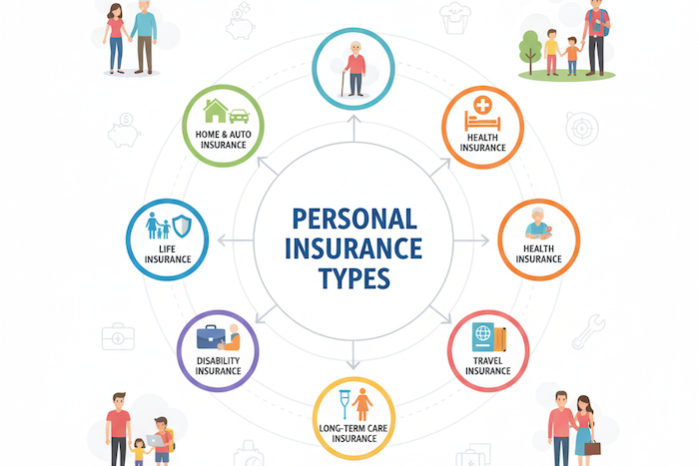
Long-term personal insurance (life insurance, trauma / critical illness, total and permanent disability (TPD), income protection, etc.) gives financial protection over many years. Because risk generally increases with age, insurers structure premiums to reflect risk and cost over time. The way you pay (premium structure) affects both the initial payment and the long-term payment.
Two main structures in Australia:
| Structure | Alternative names | Key features |
| Stepped premiums | “Variable age-stepped premiums” (new label) | Premiums start lower; each policy anniversary (often yearly), the premium increases, because you are a year older. The age-based risk is recalculated annually. (onepath.com.au) |
| Level premiums | “Variable premiums” (new label) | Premiums are calculated based on your age at entry, and locked in (for a term / until a certain age) so that you pay the same base rate (ignoring some adjustments) regardless of your increasing age. Premiums are higher at the start. (AIA Australia) |
Some policies offer hybrid structures or mixed options (starting with stepped, switching to level, or level until a given age, then stepping) to try to balance upfront affordability and long-term predictability. (Life Insurance Direct Australia)
How each premium structure works in practice
Stepped / Variable Age-Stepped Premiums
- What happens: You pay a lower premium when you are younger. Each year (on policy anniversary), the insurer recalculates the risk based on your new age plus other factors; your premium goes up accordingly. Other factors (smoking status, health, insurer base rate changes, inflation/indexation of cover) may also increase cost. (onepath.com.au)
- Cost path: As you age, especially past 50–60, the premiums can rise quite steeply. The cumulative cost over many years often exceeds what you would have paid under level / variable premium if you hold the policy for a long time. (finder.com.au)
Level / Variable Premiums
- What happens: The insurer calculates your premium at entry age (plus other underwriting), and that base premium doesn’t increase each year due to your age (for a specified term or until a specified milestone like age 65). Premiums may still change for other reasons (e.g. inflation / indexation of the sum insured, insurer cost base changes, regulatory changes, stamp duty, policy enhancements). (AIA Australia)
- Cost path: You pay more upfront relative to stepped, but the rate tends to be more stable (for the term). Over a long period (especially if you maintain cover past the point where stepped premiums become much higher), level premiums tend to be cheaper in aggregate. (finder.com.au)
Pros & Cons of each option
Here is a comparison of advantages and disadvantages, including how they apply differently depending on your insurance type (life, TPD, income protection, trauma etc.).
| Factor | Stepped / Variable Age-Stepped | Level / Variable Premiums |
| Initial cost | Lower when young → more accessible. Good if cash flow is tight now. | Higher up front. Could be a strain if budget is limited. |
| Long-term cost | Over many years, expensive. Rising cost may become unaffordable in older age. | Cheaper over long run, if policy held long enough; more predictable. |
| Budgeting & predictability | Harder to forecast future payments; risk of large increases, particularly at older ages. | Easier to budget (known base premium), more certainty. |
| Flexibility | Good for shorter-term needs (e.g. mortgage term, raising children, debt). If you intend to cancel or reduce cover, stepped may be okay. | Better if you want cover long term (through working life, retirement). Less flexibility in changing structure without re-underwriting. |
| Risk of surprises | Higher risk of premium increases, sometimes big ones; if health worsens, cover cost may rise via age but structure also could change via repricing. Regulators have noted level premium policies also sometimes have unexpected increases due to insurer repricing. (APRA) | Lower risk of age-based increases; but still risk from indexation / cover increases / insurer base rate adjustments / policy changes. Also often after certain ages (e.g. 65), level premium policies revert to stepped or similar for older ages. (AIA Australia) |
Data & Context in Australia
To make wise decisions, you need data about how much premiums have increased, how much insurance costs relative to income etc.
Here are some relevant findings:
- The Australian Prudential Regulation Authority (APRA) and ASIC have jointly reviewed life insurers’ premium increases. They found that many consumers have experienced large and unexpected premium increases, even on policies labelled “level premiums”. One driver is that “level” does not always mean completely fixed; insurer base rates, claims experience etc. can cause re-rating. (APRA)
- For income protection insurance, the typical cost is around 1% to 3% of annual earnings, depending on waiting period, benefit period, amount of cover, occupation, health etc. Add optional extras (TPD, trauma) increases that by maybe 10-20%. (Aspect)
- The insurance under superannuation contributes significantly: for example, around 8.8 million Australians are protected by life insurance through super; 8.1 million for TPD. This group cover in super provides death and disability protection with lower per-person cost due to group scale and automatic enrolment etc. (ASFA)
- Claims trends and mental health: mental health claims are rising, especially in TPD and income protection, increasing cost pressures for insurers. This affects premiums broadly. (experien.com.au)
How to decide what personal insurance is best for you
Here are practical guidelines, based on different financial situations and life stages, to help you choose whether stepped or level (variable age-stepped vs variable) makes most sense.
| Your situation / life stage | What tends to make stepped premiums more reasonable | What tends to favor level premiums |
| You are young (20s-30s), relatively healthy, income rising, short-term commitments | Stepped may be affordable now; you may not need cover for very long; you can afford increases later; you might switch insurers or reduce cover. | If you expect to hold cover for decades (e.g. want it until retirement) or want predictability, level may be better even if premium seems steep now. |
| You have tight cash flow now (low disposable income) | Stepped gives lower cost now, might free up cash for other priorities. | Level might be too much burden now, but consider locking in if you expect income to stay stable or increase, to avoid escalation. |
| You expect to have long-term dependence on the cover (e.g. dependants, debt, loss of income risk) | Stepped coverage becomes riskier as costs escalate; you may find that you have to drop or reduce coverage when you need it most. | Level gives you cost stability; helps with budgeting; reduces risk of being underinsured later when premiums skyrocket. |
| You plan to cancel or reduce cover after certain life events (e.g. kids grown, mortgage paid) | Stepped may make sense because you won’t hold cover long enough to see steep increases. | Level may overpay for what you need if you don’t really need full cover long-term. |
| Older age / near retirement | Stepped premiums can become prohibitively high. Also, health deterioration makes switching or underwriting more difficult. | Level premiums may have already provided benefit if taken earlier; but many level structures revert to stepped past a certain age, so check terms. |
Also, think about:
- Waiting periods / benefit periods in income protection: longer waiting period (e.g. 90 days vs 30 days) lowers cost. Shorter benefit periods (e.g. 2 years vs to age 65) lowers cost.
- Optional extras: trauma cover, TPD, indexation of sum insured, cover loadings for risk factors (e.g. smoking) all add to cost. Sometimes reducing or excluding extras can make cover more affordable.
- Group insurance vs individual: someone insured via super with group cover often gets lower cost per person, but cover is more standardized, may have limitations (definition of disability, benefit cap etc). Individual cover gives more control.
Key pitfalls and what to watch out for
- Misleading marketing: recently, regulators (APRA & ASIC) have flagged that many policies labelled “level” gave consumers false expectations about premium stability; many level premium policies have hidden or broad clauses allowing insurer repricing broadly. (APRA)
- Crossover point: there’s typically a year (or age) at which the cumulative cost of stepped surpasses that of level. If you cancel before that, stepped might have been cheaper; if you continue after, level usually becomes cheaper. Many people underestimate how soon the crossover occurs.
- Policy changes at older ages: many “level” premium policies change structure (or cease being purely level) at age 65 (or other milestone), switching to stepped or variable structure beyond that. Always check the policy disclosure. (AIA Australia)
- Repricing risk: Even level / variable premiums can go up if the insurer’s cost base (claims, medical inflation, mortality/morbidity trends) increases, or regulatory/legislative/tax/stamp duty changes. So stability is never absolute. (AIA Australia)
Examples / Cost Comparisons
Here are some illustrative comparisons (these are hypothetical or drawn from recent quotes) to show how much difference choice of premium structure can make.
- Taking a 40-year-old non-smoker in NSW, $500,000 life cover: over 10 years, cumulative cost of age-stepped was lower, but by year 20 or 25 (depending on insurer), the cost of stepped had exceeded what would have been paid under level. (From LifeInsuranceDirect comparison) (Life Insurance Direct Australia)
- Income protection: cost in many cases is around 1-3% of annual income, but waiting period, benefit period and optional extras significantly affect price. For example, adding TPD or trauma cover may add roughly 10-20% to the premium for income protection. (Aspect)
Guidance: How to afford long-term insurance
Given the trade-offs, here are steps & strategies to make long-term insurance more affordable.
- Assess what you really need
- Decide what risks are biggest for you: death, income loss, disability, serious illness.
- Estimate how much cover you need (debts, dependents, cost of living, future expenses).
- Determine how long you need it (e.g. until retirement, until children independent, until mortgage paid, etc.).
- Compare policy terms carefully
- Between insurers: premium growth assumptions, cost increase history, what causes premiums to change (age, base rate, indexation).
- Read Product Disclosure Statement (PDS). Find what happens at age 65/70 etc.
- Choose the premium structure suited to your horizon
- If your plan is to keep the policy long term (20-30 years+, through your working life), leaning toward a level / variable premium is often wiser.
- If cash flow is limited now or you need cover for a shorter period, stepped might make sense.
- Consider hybrid or mixed strategies
- Take some cover as level premium for the portion you’ll likely need long term. Maybe take additional cover via stepped to meet short-term higher needs.
- Use group cover (via superannuation) for basic protection, and top up with individual cover if needed.
- Manage optional features to reduce cost
- Longer waiting periods for income protection reduce premium.
- Limit or remove indexation if you can accept fixed cover.
- Choose benefit periods appropriately.
- Avoid or reduce riders you don't need.
- Review regularly
- As income changes, dependents change, health status changes: you may want to adjust cover, switch insurer, or change premium structure (if allowed).
- Also monitor any industry‐wide premium increases or base rate changes via insurer / regulator publications.
- Work with a reputable financial planner / insurance adviser
- They can help you model different scenarios, forecast long-term cost, see hidden clauses, understand reversion to stepped after certain ages.
- Find an adviser who is licensed under the Financial Adviser Standards and Ethics Authority (FASEA), or equivalent, who provides personalised advice (not just selling).
Types of long-term insurance and special considerations
Each insurance type has its own features and cost drivers; the premium structure interacts differently with them.
| Insurance type | Key cost drivers | Implications for premium structure choice |
| Life insurance (death cover / term life) | Age, smoking status, health, sum insured, policy term. Rarely use benefit period because it's lump sum. | Level premiums help if you want cover until older age or through retirement. Stepped may work if needed only until mortgage or children independent. |
| Total & Permanent Disability (TPD) | Definition of disability, occupation, health, age, how benefit is paid (lump sum or via super), sum insured. | Because claims for TPD become more likely with age, steep premium rises with stepped; level may save a lot if held long term. But definitions matter (more restrictive definitions cost less). |
| Trauma / Critical Illness | Type of illnesses covered, waiting periods, sum insured, whether multiple claims allowed, medical loadings. | Similar dynamic: level premium may cost more early but gives certainty; if you expect to maintain cover long term, level may be safer. |
| Income protection | Waiting period, benefit period (how long payments run), percentage of income replaced, occupation, health, whether cover is inside or outside super, inflation adjustment. | Premium structure is somewhat different: increases due to age, but waiting and benefit period big drivers. A stable premium structure helps budgeting. If stepping, ensure you can sustain the increases later. |
When level (variable) premium may not be worth it
- If you only need cover for a short time (e.g. 5-10 years) or until a specific event (mortgage repaid, children independent).
- If your income is low now, and high premiums early would force you to underinsure or delay cover.
- If you're very confident you can switch insurer or reduce cover later, though underwriting and health changes may make that hard or expensive.
- If the difference between initial stepped and level premium is so great that taking level premiums severely strains your budget, risking lapsing the policy, which would defeat the purpose.
Regulations, industry practice, and recent reforms
- Labels have changed: what used to be called “stepped premiums” are now often called variable age-stepped premiums, and “level premiums” are now called variable premiums, to better reflect that even “level” premiums may still change under certain circumstances. (APRA)
- APRA & ASIC have required insurers to improve transparency (how and when premiums will change, what triggers increases), and ensure Product Disclosure Statements are clear. (APRA)
- Given rising claims costs (especially from mental health etc.) insurers are under cost pressure; this tends to push premiums up for all policy types. (experien.com.au)
Summary & action checklist
To summarise:
- Stepped / variable age-stepped starts low, increases with age; good for short-term cover or when cash flow is limited now.
- Level / variable costs more initially, but tends to be cheaper over long horizon, offers stability.
- Your best choice depends on how long you expect to need the insurance, how stable you expect your income and expenses, how much risk you can tolerate, and what optional features you select.
Here’s a suggested checklist you can use before you choose:
- How long will I hold this cover? Until retirement / a fixed date / until debts paid etc.
- What is my budget now, and what could I afford if premiums increase 5-10% annually?
- What waiting period / benefit period / optional riders do I need?
- Am I healthy / non-smoker / low risk? If not, underwriting may limit options or increase cost.
- What are the insurer’s terms about premium increases beyond age (base rate changes, indexation etc.)?
- Does the policy switch structures at older age, or revert to a stepped structure?
- Can I afford the level premium upfront without compromising other financial goals? If not, perhaps mix cover or reduce amount or pick stepped for part.
- Get multiple quotes, compare policies, and speak with a financial adviser who can model different scenarios in your personal case.
Why working with a financial adviser / planner is essential
- Personalised modelling: they can project out what you will be likely to pay under each structure over decades, given your health, life stage, likely income growth, inflation, etc.
- Understanding wording & hidden clauses: for example, what “level” actually covers (until what age), what causes premiums to change other than age, what definitions of “disability” or “trauma” are used.
- Tax, super, legal issues: Income protection premiums may be tax-deductible in certain cases; insurance inside superannuation has different tax & legal implications; removal or addition of cover may have consequences.
- Avoiding mis-selling: ensuring you’re not sold a policy with a premium structure or features that are unaffordable later.
- Keeping you updated: as the insurance environment (claims, base rates, regulatory pressures) changes, policies may need to be reviewed or adjusted.
Make sure the adviser is properly licensed (Australian Financial Services Licence), has good reputation, understands long-term insurance (not just general insurance), and shows you actual cost projections.
Conclusion
Affording long-term insurance in Australia comes down in large part to choosing the right premium structure for your coverage horizon, financial capacity now, and tolerance for future cost increases.
- For those expecting to keep insurance for many decades (e.g. through working life, until retirement), level/variable premiums are often more cost-effective over total life of the policy.
- If cover is needed for shorter term, or current income/prestige is tight, stepped/variable age-stepped may be the only viable option, but carry risk of high costs later.
- Mixing, adjusting optional features, using group cover, comparing insurers, and reviewing policy regularly are all strategies to make insurance more affordable and sustainable.
Above all: don’t accept “level” or “stepped” labels at face value. Read the fine print, understand what can make premiums increase, and work with a trusted financial planner to map out what will work for you.
References
Below are sources I used in assembling this article.
- “Variable vs age-stepped premiums”, OnePath (Australia). (onepath.com.au)
- “Stepped vs level premiums: What’s the difference?”, CompareTheMarket Australia. (Compare the Market)
- “Stepped vs level premiums: What’s the difference?”, Finder Australia. (finder.com.au)
- “Understanding Level Premiums”, AIA Australia. (AIA Australia)
- “Premium increases in life insurance: Are life companies addressing issues identified by regulators”, APRA / ASIC. (APRA)
- “How much does income protection insurance cost in Australia?”, Aspect UW. (Aspect)
- “Life in superannuation: Protection through super”, ASFA / APRA data. (ASFA)
- “Mental illness claims in TPD / income protection growing”, Experien / CALI. (experien.com.au)
- LifeInsuranceDirect: comparison of Variable Age-Stepped vs Variable premiums for $500,000 life cover in NSW. (Life Insurance Direct Australia)
