
What to Consider Before Investing in Property With an SMSF
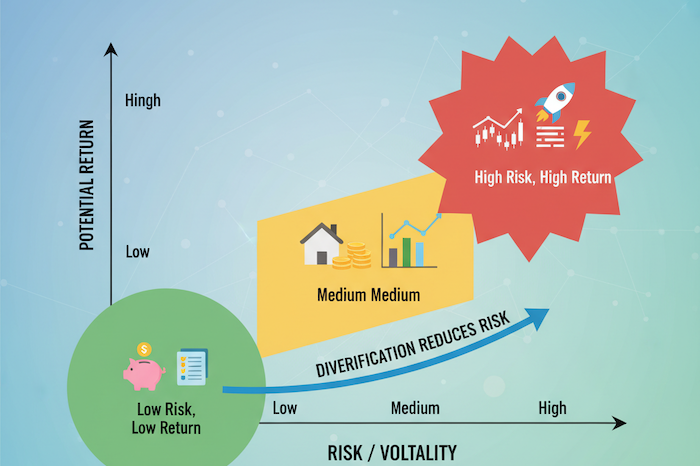
Diversification—the practice of spreading your investments across different asset types—is one of the few tools that reliably reduces risk and volatility without (necessarily) sacrificing return. In the Australian context, where markets can be volatile, interest rates fluctuate, and global events have knock-on effects, adequate diversification helps smooth returns, reduce drawdowns, and preserve capital.
Below, I explain how diversification works, what the evidence shows for different asset classes (cash, bonds, property, shares, metals), types of diversified funds, how financial planners help clients set these up, and practical advice (including pitfalls).
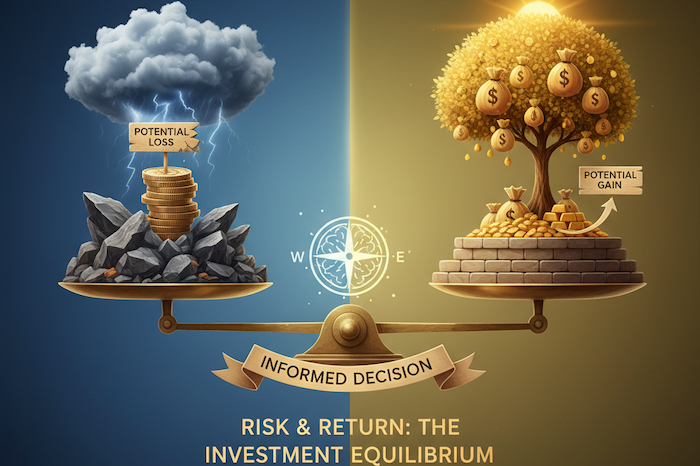
Investing always involves a trade-off between risk vs return. Higher potential returns usually come with greater risk—or more precisely, greater uncertainty of outcomes. For investors in Australia, managing this trade-off effectively means employing strategies that pursue growth while minimising the risk of extreme losses. Below, I explain why balancing risk vs return is crucial, describe common strategies (diversification, hedging, asset allocation), how they work together, provide practical examples, and outline pitfalls to avoid. I also emphasise that individual circumstances matter, and it's wise to consult a financial professional to build a plan suited to your goals and risk appetite.
Making financial decisions—on investments, superannuation, insurance, estate planning, debt, retirement—often involves long-term consequences. Poor advice can cost far more than fees: it can erode savings, expose you to risk you didn’t understand, or trap you in unsuitable financial products. Conversely, good advice aligned with your situation can help you grow wealth, minimise tax or fees, protect against downside, and improve confidence and wellbeing.
Here are some concrete impacts:
So getting advice that is qualified, ethical, transparent, and tailored to your needs isn’t just nice — it’s essential to safeguarding your financial future.
In recent years, thanks to easy access to information, trading apps, and social media influencers, also known as “finfluencers,” there has been a noticeable rise in novice DIY investors being lured into high-risk, often speculative, get-rich-quick schemes. These can seriously damage long‐term financial well-being. Below are five mistakes I frequently observe, along with their causes, the harm they cause, and how to avoid them.
What it is:
Buying into investments because they are “hot” (e.g. trending cryptocurrency coins, meme stocks, new tech IPOs), often with little knowledge of their fundamentals, no understanding of volatility or downside risk, or because someone on social media promises big gains.
A comfortable retirement is not simply the absence of work. It is a long phase of life during which income must be sustained, expenses managed, and financial risks navigated, often over several decades. In Australia, the retirement income system is built on three pillars: the Age Pension, mandatory superannuation savings, and voluntary savings or other assets. Retirees typically draw on a mix of these sources. (Treasury)
Yet many Australians remain uncertain, underprepared or overly reliant on a single source. A recent survey found that only 46% of Australians felt confident that they would live well in retirement — and that planning and goal-setting were among the key drivers of this confidence. (nestegg)
To boost confidence in outcomes, the following five habits represent pillars of good retirement practice: habitually budgeting and managing cash flow; proactive planning and review; seeking professional advice; leveraging tax and regulatory settings; and strategically using the Age Pension and social supports. Below, I describe why each matters and how to put it into practice in Australia.
Being single means your financial plan rests entirely on you—no partner's income cushion, fewer shared expenses, and more responsibility for your future financial security. But it also means you get complete control over decision-making. The best strategy largely depends on your age, life stage, and the generation to which you belong. Below, I break down key financial challenges and priorities for each age group/generation, as well as what singles in each bracket should focus on.
Money mistakes happen to good people. What matters is knowing where they tend to trip up, what the cost is, and what to do differently. The following sections outline key areas where many people go wrong, backed by data, and provide suggestions to build stronger habits.
Get Ahead Financially means starting to plan your finances early — in your 20s or 30s rather than waiting until mid-life — is more than “nice to have”: it can meaningfully change your retirement lifestyle, reduce stress, and avoid mistakes that accumulate high costs. The earlier you act, the more years of compound returns you get, the fewer bad habits build up, and the fewer debts spiral. Below are three core strategies, with benefits, concrete examples, and pitfalls to avoid. But first, some context with data.
These facts tell us: young people have both opportunity (time for compounding, ability to change habits early) and risk (debt, insufficient savings, missed super contributions) — making early planning powerful.
Families in Australia today face complex financial decisions. Rising living costs, shifting tax rules, volatile housing markets, and uncertain superannuation returns all mean that a clear financial plan is no longer optional—it is essential. A well-developed family financial plan helps align priorities, safeguard against unexpected shocks, and build wealth with discipline. This article explores why families should invest in financial planning, what elements to evaluate, and the common mistakes to avoid.
A financial plan is more than a budget—it is a roadmap that brings together income, expenses, assets, liabilities, and goals into one coordinated strategy. For families, this means:
A 2022 survey by the Financial Planning Association of Australia found that 73% of Australians with a written financial plan reported higher financial wellbeing compared to just 29% without one.