
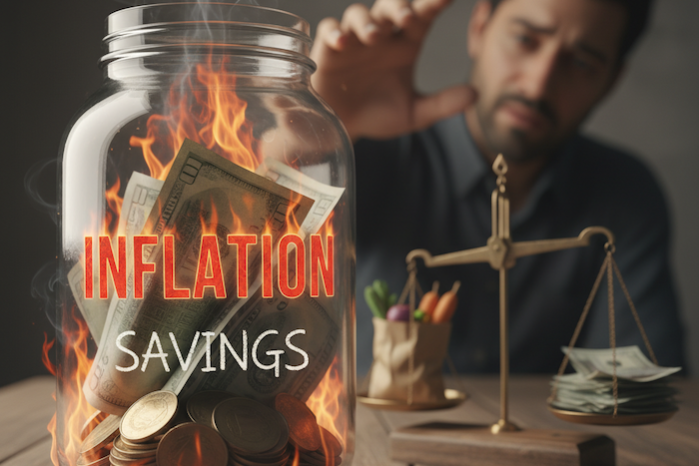
As an Australian financial advisor, I’ve had countless conversations with clients over the years about market volatility, interest rate movements, and global economic shifts. Yet, few topics generate as much immediate, palpable anxiety as the recent resurgence of inflation. For a generation of investors who grew accustomed to a low-inflation environment, the current economic climate feels like navigating uncharted waters. The truth is, inflation is not just a headline figure; it is a silent, persistent threat that fundamentally alters the mathematics of wealth creation, eroding the purchasing power of your hard-earned savings and demanding a strategic reassessment of your investment portfolio.
This article is designed to cut through the noise and provide a clear, data-backed perspective on how inflation affects your investments, what it means for your long-term goals, and the practical steps you can take to protect and grow your capital. Our focus will be on the Australian context, drawing on local data and asset class performance to guide our discussion.
Part I: Understanding the Silent Erosion
What is Inflation, and Why Does it Matter to Your Portfolio?
At its core, inflation is defined as a general increase in the prices of goods and services in an economy over a period of time (1).
In Australia, the most common measure is the Consumer Price Index (CPI), calculated by the Australian Bureau of Statistics (ABS), which tracks the price changes of a representative basket of household goods and services (2).
The Reserve Bank of Australia (RBA) aims to keep inflation within a target band of 2–3% on average over the medium term, a level considered conducive to sustainable economic growth (3).
When inflation exceeds this target, as it has in recent periods, the impact on your financial life is immediate and profound. The most critical consequence is the erosion of purchasing power. Imagine you have $100,000 in savings today. If the inflation rate is 5%, then in one year, you will need $105,000 to buy the exact same basket of goods and services. Your nominal wealth remains $100,000, but your real wealth—what that money can actually buy—has decreased. This is the insidious nature of inflation: it makes you poorer without reducing the number on your bank statement.
The Critical Difference: Nominal vs. Real Returns
Understanding the difference between nominal and real returns is the single most important concept for an investor in an inflationary environment.
- Nominal Return: This is the return you see reported on your investment statements—the percentage gain before accounting for inflation. If your portfolio grows from $100,000 to $108,000, your nominal return is 8%.
- Real Return: This is the true measure of your investment success. It is the nominal return adjusted for the rate of inflation. It tells you how much your purchasing power has actually increased.
The relationship is simple, yet often overlooked:
\text{Real Return} \approx \text{Nominal Return} - \text{Inflation Rate}
If your portfolio earns a nominal return of 8% but inflation is running at 7.8% (as it was at the end of 2022 in Australia (4), your real return is a meagre 0.2%. You have barely kept pace with the rising cost of living. If your nominal return is 5% in the same scenario, your real return is a negative -2.8%, meaning your investment has effectively lost value in terms of what it can purchase.
This concept is vital for long-term planning. The Rule of 72 is a useful mental shortcut: divide 72 by the annual inflation rate to estimate how many years it will take for the purchasing power of your money to halve. At 3% inflation, it takes 24 years. At 6% inflation, it takes just 12 years. This stark difference underscores why a passive, "set and forget" approach is dangerous when inflation is high.
Part II: Inflation’s Impact on Australian Asset Classes
Inflation does not affect all asset classes equally. Some investments offer a degree of protection, while others are particularly vulnerable. Historically, the performance of major Australian asset classes during inflationary periods provides a clear roadmap for where capital tends to flow.
1. Equities (Shares)
The impact of inflation on the Australian share market is complex and depends heavily on the source of the inflation and the specific sector.
- The Good: Companies with pricing power—the ability to raise the prices of their goods or services without significantly reducing demand—can often pass on increased costs to consumers, thereby maintaining or even growing their profit margins in nominal terms. This includes companies in essential services, strong brands, and those with high barriers to entry. Historically, Australian equities have been an effective inflation hedge over the long term (5).
- The Bad: Companies with high debt levels, low-profit margins, or those operating in highly competitive industries with little pricing power are vulnerable. Their input costs (raw materials, wages) rise, but they cannot raise their output prices fast enough, leading to a squeeze on real earnings. Furthermore, as central banks raise interest rates to combat inflation, the cost of borrowing increases, which can depress share valuations, particularly for growth stocks whose future earnings are discounted more heavily.
2. Property (Real Estate)
Australian residential and commercial property is often considered a strong inflation hedge, primarily because it is a real asset.
- Residential Property: Property values and rental income tend to rise with inflation. As the cost of building new homes increases (due to rising material and labour costs), the value of existing homes is supported. Rental yields, which are a form of income, also typically adjust upwards over time, providing an inflation-linked income stream.
- Commercial Property and Infrastructure: Assets like toll roads, utilities, and commercial buildings often have contracts that are explicitly linked to the CPI, providing a direct, contractual hedge against inflation (6).
This makes them particularly attractive in a high-inflation environment. However, rising interest rates can increase the cost of financing property purchases, which can temporarily depress capital values.
3. Fixed Income (Bonds)
Conventional fixed-rate bonds are arguably the most vulnerable asset class to unexpected inflation.
- The Challenge: When an investor buys a bond, they lock in a fixed stream of nominal interest payments (coupons). If inflation rises unexpectedly after the purchase, the real value of those fixed payments declines rapidly. Furthermore, central bank efforts to curb inflation involve raising the cash rate, which causes the market value of existing bonds to fall. This is why bond portfolios have suffered significant capital losses during recent rate-hiking cycles.
- The Exception: Inflation-Linked Bonds (ILBs): These bonds, such as the Australian Government Inflation-Indexed Bonds, are specifically designed to combat this risk. The principal value of the bond is adjusted in line with the CPI, and the coupon payments are then calculated on this inflation-adjusted principal (7).
This provides a near-perfect, direct hedge against inflation, ensuring the real value of the investment is preserved.
4. Cash and Cash Equivalents
Holding cash is a guaranteed way to lose purchasing power during an inflationary period.
- The Reality: While rising interest rates mean savings accounts and term deposits offer higher nominal returns, these returns rarely keep pace with high inflation. If inflation is 6% and your term deposit pays 4%, your real return is -2%. Cash offers liquidity and capital preservation in nominal terms, but it is a capital destruction tool in real terms when inflation is elevated. It should be viewed as a tactical reserve, not a long-term investment strategy.
| Asset Class | Inflation Impact | Historical Performance (General) | Key Consideration for Australian Investors |
| Equities | Mixed. Positive for companies with pricing power; negative for high-debt, low-margin firms. | Strong long-term hedge, but volatile in the short term as rates rise. | Focus on quality, value, and sectors with strong domestic pricing power. |
| Property | Generally positive. Values and rents tend to rise with inflation. | Strong real returns over the long run, especially in residential and infrastructure. | Sensitive to interest rate hikes and financing costs. Infrastructure offers contractual hedge. |
| Fixed-Rate Bonds | Highly negative. Fixed payments lose real value; capital value falls as rates rise. | Poor performance during unexpected inflation spikes. | Avoid long-duration, fixed-rate bonds in a rising rate environment. |
| Inflation-Linked Bonds (ILBs) | Highly positive. Principal and coupons adjust with CPI. | Direct, contractual hedge against inflation. | Excellent for preserving real capital, but real yields can be low. |
| Cash | Highly negative. Nominal returns rarely match high inflation. | Guaranteed loss of purchasing power in real terms. | Necessary for liquidity, but detrimental for long-term wealth preservation. |
Part III: Adjusting Your Portfolio: Strategy and Re-balancing
When inflation is high, a passive approach to portfolio management is insufficient. Investors must actively consider how to adjust their asset allocation to mitigate risk and capture real returns.
The Imperative of Real Return Focus
The first step is a mental shift: stop focusing on nominal returns. Your investment goal is not to accumulate more dollars; it is to accumulate more purchasing power. This means your required rate of return must be explicitly calculated as your target real return plus the expected inflation rate.
For example, if your financial plan requires a 4% real return to meet your retirement goals, and you anticipate average inflation of 3%, your portfolio must aim for a nominal return of at least 7%. If your current portfolio is only delivering 5% nominal, you are falling behind your long-term objective, even if the number on your statement is growing.
Strategic Asset Allocation and Re-balancing
Inflationary periods often necessitate a tactical shift in asset allocation. This is not about market timing, but about tilting your portfolio towards assets with proven inflation-hedging characteristics.
1.Increase Exposure to Real Assets: Consider increasing your allocation to assets that are inherently linked to the cost of living and production. This includes:
- Listed Infrastructure: Assets with CPI-linked revenues (e.g., airports, utilities).
- Real Estate Investment Trusts (REITs): Especially those focused on commercial or industrial property with short-term leases that allow for frequent rent adjustments.
- Commodities: While volatile, commodities like gold, energy, and industrial metals often perform well in the early stages of an inflationary cycle as they are the raw inputs whose prices are driving the inflation (8).
2.Re-evaluating Fixed Income: Reduce exposure to long-duration, fixed-rate government and corporate bonds. If you require fixed income for stability, shift towards:
- Short-Duration Bonds: These are less sensitive to interest rate hikes.
- Inflation-Linked Bonds (ILBs): As discussed, these are the purest form of inflation protection.
3.Quality over Quantity in Equities: Focus your equity allocation on companies with strong balance sheets, high-profit margins, and, crucially, proven pricing power. This often means favouring value stocks (companies with strong current earnings) over speculative growth stocks (companies whose value relies heavily on distant future earnings, which are heavily discounted by higher interest rates).
Re-balancing is also critical. If inflation causes your real assets (like property or commodities) to outperform, they will grow to represent a larger portion of your portfolio. Re-balancing involves systematically selling some of the outperforming assets and buying more of the underperforming ones to bring your portfolio back to its target allocation. This is a disciplined way to lock in gains and maintain your desired risk profile, preventing your portfolio from becoming accidentally over-exposed to a single asset class.
Part IV: Strategies to Combat Inflation: Pros, Cons, and Costs
Investors have several tools at their disposal to fight back against the erosion of inflation. Each comes with its own set of trade-offs regarding cost, risk, and effectiveness.
1. Equities (The Long-Term Champion)
| Strategy | Pros | Cons | Cost/Risk Consideration |
| Quality/Value Stocks | Proven long-term real return generator; companies can pass on costs. | High short-term volatility; sensitive to economic slowdowns caused by rate hikes. | Risk: Market risk. Cost: Standard brokerage/management fees. |
2. Real Assets (The Tangible Hedge)
| Strategy | Pros | Cons | Cost/Risk Consideration |
| Direct Property | Excellent long-term hedge; provides inflation-linked rental income. | High transaction costs (stamp duty, agent fees); illiquidity; high concentration risk. | Risk: Interest rate risk, liquidity risk. Cost: High transaction and maintenance costs. |
| Listed Infrastructure | Contractual CPI-linkage; more liquid than direct property. | Can be sensitive to interest rate movements; regulatory risk. | Risk: Regulatory risk. Cost: Standard fund management fees. |
3. Inflation-Linked Securities (The Direct Hedge)
| Strategy | Pros | Cons | Cost/Risk Consideration |
| Inflation-Linked Bonds (ILBs) | Direct, contractual protection against CPI rises; preserves real capital. | Real yields can be low or even negative; less liquid than nominal bonds. | Risk: Low real return risk. Cost: Standard brokerage/fund management fees. |
4. Commodities (The Tactical Play)
| Strategy | Pros | Cons | Cost/Risk Consideration |
| Gold and Industrial Metals | Gold is a traditional store of value; industrial metals benefit from rising input costs. | Highly volatile; do not generate income; performance is inconsistent. | Risk: High volatility, lack of income. Cost: Storage/insurance for physical; fund management fees for ETFs. |
5. Cash (The Liquidity Reserve)
| Strategy | Pros | Cons | Cost/Risk Consideration |
| High-Interest Savings/Term Deposits | Provides essential liquidity; zero nominal capital risk. | Guaranteed loss of purchasing power in real terms when inflation is high. | Risk: Inflation risk (loss of real value). Cost: Opportunity cost of foregone real returns. |
Part V: Common Mistakes Investors Make When Reacting to Inflation
In times of economic uncertainty, emotion often overtakes logic, leading investors to make costly, irreversible mistakes. As your advisor, my role is to help you maintain discipline and avoid these common pitfalls.
1. Panic-Selling and Market Timing
The most damaging mistake is reacting emotionally to market volatility. When the news is dominated by inflation fears and falling asset prices, the instinct to sell and "wait it out" is strong. However, this invariably leads to selling low and buying high. The evidence is overwhelming: successful investing is about time in the market, not timing the market (9).
Attempting to predict the peak of inflation or the bottom of the market is a fool's errand that even professional economists struggle with. A disciplined, long-term strategy that incorporates re-balancing is far more effective than emotional trading.
2. Overloading on Cash
While it feels safe, moving a significant portion of your portfolio into cash is a guaranteed way to lose the inflation battle. As we have established, cash is a real-value-destroying asset in a high-inflation environment. It is crucial to maintain an adequate cash buffer for emergencies (typically 3-6 months of living expenses), but any capital beyond that should be strategically deployed into assets that have a reasonable chance of delivering a positive real return. The opportunity cost of holding too much cash is the difference between the inflation rate and the interest rate you receive—a gap that can quickly compound into a substantial loss of future wealth.
3. Ignoring Diversification
Inflationary pressures can be uneven, affecting different sectors and geographies at different times. An investor who is heavily concentrated in one asset class—for example, a portfolio dominated by Australian residential property or long-duration technology stocks—is taking on unnecessary, uncompensated risk. Diversification across asset classes (equities, property, fixed income, commodities), sectors, and geographies remains the only free lunch in finance (10).
A well-diversified portfolio ensures that when one asset class struggles, another may be performing well, smoothing out returns and providing a more resilient hedge against varied inflationary scenarios.
4. Mistiming the Inflation-Fighting Assets
Certain assets, like commodities, tend to perform best in the early stages of an inflationary cycle. By the time inflation is widely reported and discussed, much of the price appreciation may have already occurred. Chasing these assets after they have already spiked is a classic mistake. A better approach is to have a strategic, permanent allocation to inflation-hedging assets, rather than trying to tactically jump in and out. This ensures you benefit from the hedge when it is needed most, without the impossible task of perfect market timing.
Part VI: The Long View and the Value of Advice
The current economic environment is challenging, but it is not unprecedented. The history of Australian finance is marked by periods of high inflation, and the lessons learned remain relevant today. The most important takeaway is the need to stay focused on your long-term financial goals.
Inflation is a headwind, but it is a temporary one. Your investment horizon—the time between now and when you need the money—is your greatest asset. For most investors, this horizon spans decades, during which time the compounding power of real returns will far outweigh the short-term volatility caused by inflation and interest rate cycles.
A robust, well-structured portfolio is one that is built to withstand all economic cycles, not just the good times. It is a portfolio that has a clear purpose, a defined risk tolerance, and a strategic allocation to real assets that can protect your purchasing power.
Before making any major changes to your portfolio in reaction to inflation, I urge you to seek advice from a qualified financial planner. We can help you:
- Quantify Your Real Return Needs: Accurately calculate the nominal return required to meet your specific goals, factoring in your personal inflation rate.
- Stress-Test Your Portfolio: Model how your current asset allocation would perform under various inflation and interest rate scenarios.
- Implement Disciplined Re-balancing: Ensure your portfolio remains aligned with your risk profile without succumbing to emotional decision-making.
Inflation is a powerful force, but with knowledge, discipline, and a well-crafted strategy, you can ensure your investments continue to work for you, preserving and growing your wealth in real terms for the future.
References
[1] Reserve Bank of Australia (RBA). Causes of Inflation.
[2] Australian Bureau of Statistics (ABS ). Consumer Price Index (CPI).
[3] Reserve Bank of Australia (RBA ). Australia's Inflation Target.
[5] Morningstar. How inflation impacts different types of investments.
[6] First Sentier Investors. Infrastructure as a hedge to inflation.
[7] FIIG Securities. Inflation linked bonds.
[8] Vanguard. Inflation - what to know and what to do.
[9] Morgan Stanley. Top 5 Mistakes Investors Make in Volatile Markets.
[10] Sydney Financial Planning. Common mistakes investors make - that you should avoid.


